Internal Linking Strategy: How Small Businesses Build Topical Authority
Why Internal Linking Matters to Small Businesses
Summary
- Internal linking means linking from one page on your website to another page on the same site, using descriptive anchor text.
- Topical authority is what search engines call it when your site covers a subject so thoroughly that it becomes a trusted source on that topic. A strong internal linking strategy is how you build it.
- Why it matters for small businesses: internal links help search engines understand your site, distribute ranking signal across pages, and signal expertise in your specific area.
- The three rules that matter most: link with descriptive anchor text (not “click here”), connect related content into clusters, and prioritize links into your money pages.
Bottom line: internal linking is the highest-leverage SEO work most small business sites are not doing. It costs nothing, requires no new content, and compounds over time.
There’s a strange thing that happens once a small business publishes a few dozen blog posts. The site gets bigger. The content gets better. And yet rankings barely move. Some pages rank well, others don’t, and the overall picture stays roughly the same. The owner ends up wondering whether SEO is just a slow grind or whether something is missing.
In most cases, something is missing. The site has the content but not the connective tissue between it. Each page is an island. Search engines visit, read, and move on without ever understanding that all these pages belong to the same subject expert. That connective tissue is internal linking, and the result of doing it well is what SEO folks call topical authority.
The good news is that this is one of the most accessible SEO improvements a small business can make. You don’t need new content. You don’t need to spend money. You just need to make sure your existing pages actually talk to each other. This guide walks through how to do it, written for small business owners, not SEO practitioners. You can see internal linking in action throughout the Cloverjet resources library and the links sprinkled across this article.
What Internal Linking Actually Is
Most explanations of internal linking get either too technical or too vague. Here’s the practical version.
The Basic Definition
An internal link is any hyperlink that goes from one page on your website to another page on the same website. The link in the previous paragraph pointing to the Cloverjet resources library is an internal link. So is the link in your navigation menu pointing to your contact page. So is a link in a blog post pointing to a related blog post.
External links, by contrast, go to other websites. Both matter, but they do different jobs. Internal links shape how search engines and visitors move around your site. External links are about credibility and references.
Why Search Engines Care
Search engines like Google use links as one of the primary ways to understand the relationships between pages and topics. When your blog post about choosing a web designer links to your contact page using the anchor text “schedule a consultation,” Google now has a stronger signal that the contact page is relevant to people looking for web design help.
The Google Search Central documentation on links covers the technical side: search engines follow links to find content, and they use the surrounding context to understand what that content is about. Pages that get more internal links, especially from related, high-authority pages, tend to rank better.
Why Visitors Care
The other half of internal linking is about people. A visitor who lands on a blog post and finds three relevant internal links to related articles is more likely to stay on the site, learn more, and ultimately become a customer. Internal links keep people moving through your content instead of bouncing back to Google.
What “Topical Authority” Means in Plain English
Topical authority is one of those phrases that sounds more complicated than it is.
The Simple Version
Think of how you decide who to trust on a subject. If a friend has built five different websites, talked through three of them with you, and mentioned a specific tool that solved a specific problem, you trust them on websites. They’ve shown depth.
Search engines work the same way. A site that has one page about “tax preparation” probably isn’t a tax expert. A site that has thirty pages covering individual tax topics, small business taxes, tax deadlines, common tax mistakes, and specific tax forms, and where those pages all link to each other in sensible ways, looks like a tax expert. That’s topical authority.
Why It Matters for Small Businesses
For local and small businesses, topical authority is one of the most realistic ways to compete against bigger sites. You’re never going to outspend a national brand on backlinks. But you can outwork them on depth in your specific subject area, especially for your local market. A Jacksonville-based accountant who publishes thoroughly on tax topics, and links those pages together strategically, has a real shot at outranking generic national content.
This is also where AI engines come in. ChatGPT, Perplexity, and Google’s AI Overviews increasingly cite sites that demonstrate clear expertise on a topic. Internal linking is one of the strongest signals these systems use to identify which sites have that expertise.
Three Rules That Drive Internal Linking Results
You can read entire books on internal linking, but the practical results almost always come down to three rules.
Rule 1: Use Descriptive Anchor Text
The anchor text is the clickable words in a link. The single biggest internal linking mistake on small business sites is anchor text that says “click here” or “learn more” or “this article.”
Those phrases tell search engines nothing about what the linked page is about. Compare that to anchor text like “managed WordPress hosting for small business” or “how to measure SEO success.” Now the link does double duty, it gives the visitor a reason to click and it gives search engines a clear topical signal.
The rule of thumb: your anchor text should describe what someone will find when they click. If a stranger could read just the anchor text and have a reasonable idea what the linked page is about, you’ve done it right.
Rule 2: Build Content Clusters Around Topics
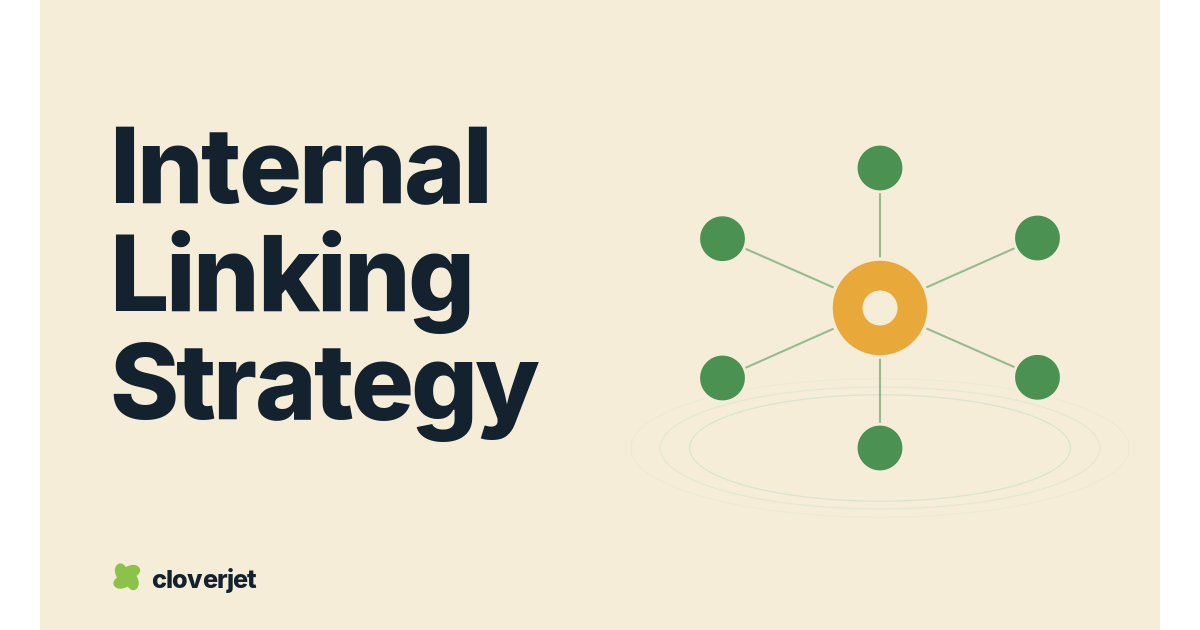
Instead of treating each blog post as a one-off, group related posts into clusters. One main “pillar” page covers a topic broadly. Multiple “cluster” pages cover specific subtopics in depth. All of them link to each other and back to the pillar.
For a small accounting firm, a cluster might look like: a main page on “small business taxes,” supporting pages on quarterly estimated taxes, business expense categories, common deductions, and choosing a tax professional. Each cluster page links to the others and back to the main page. The whole thing reads as a coherent body of expertise, not a scattered blog.
If you’d like to see this in practice, our Diagnose. Clarify. Execute. process starts every content strategy engagement with mapping these clusters. It’s the difference between content that ranks and content that disappears.
Rule 3: Point Internal Links Toward Money Pages
Your money pages, service pages, contact pages, quote request pages, are usually the ones that produce business. Most small business sites have lots of internal links going into the blog and almost none going into the pages that actually convert.
Flip that. Every blog post you publish should ask: “What money page is this post most related to?” Then include a natural, descriptive link to that page somewhere in the body. Over time, the cumulative signal makes those money pages rank better for the keywords you actually want.
A Practical Internal Linking Workflow for Small Businesses
Here’s the workflow we use when auditing internal links for clients.
Step One: Inventory Your Money Pages
Start by listing the pages on your site that produce business. Service pages, contact pages, location pages, quote request pages, lead magnets. Usually there are five to ten. These are your priority targets, pages you want internal links flowing into.
Step Two: Inventory Your Content
Now list your blog posts, articles, and informational pages. These are the sources of internal link signal. For each one, note which money page or pages it’s most topically related to.
Step Three: Find and Fix the Gaps
Go through each content piece and check: does it currently link to the most relevant money page using descriptive anchor text? If not, add the link. If the existing link uses weak anchor text, rewrite it.
This is usually a one-time exercise that takes a few hours and produces outsized results. Most small business sites can identify 30–50 missed internal linking opportunities in a single audit pass.
Step Four: Build Linking Into Your Content Process
The reason internal linking gets neglected is that nobody owns it during content creation. Build it into your workflow. Every new article should include at least three internal links: one to a related article, one to a money page, and one to a pillar or category page. That habit alone, applied consistently, will compound into measurable ranking gains over six to twelve months.
How Internal Linking Connects to the Rest of Your SEO
Internal linking doesn’t operate in isolation. Done well, it amplifies everything else you’re doing.
Site Architecture and Performance
A well-linked site is also typically a well-organized site. If your internal linking strategy reveals that two pages cover almost the same topic, that’s a signal to consolidate. If a category has too many pages competing with each other, that’s a signal to restructure. We’ve found that hosting and site performance often surface in the same audits, issues we walked through in managed WordPress hosting vs shared hosting , because a slow, poorly organized site rarely has clean internal linking either.
Measuring the Impact
Strong internal linking shows up in measurable ways. Pages that previously sat unnoticed start ranking. Money pages slowly climb. Average time on site goes up because visitors are following links to related content. We covered the metrics to watch in how to measure SEO success.
The catch is that these changes happen slowly. Internal linking isn’t a quick win. It’s a compound investment. Three months in, you might not see much. Twelve months in, the difference is unmistakable.
Frequently Asked Questions
What is internal linking in SEO?
Internal linking is the practice of linking from one page on your website to another page on the same website, using descriptive anchor text. It helps search engines understand your site structure, distributes ranking signal across pages, and helps visitors discover related content.
How many internal links should I have per page?
There’s no universal number, but a good range for most content pages is 3–10 internal links. Anything fewer means you’re leaving signal on the table. Anything more starts to feel forced and dilutes the value of each link. Google has stated there’s no strict limit, but quality matters more than quantity.
Does internal linking really affect rankings?
Yes. Google has confirmed multiple times that internal links are a significant ranking factor — both for helping pages get discovered and for distributing relevance signal. The effect is most visible on pages that receive more internal links from related content over time.
What’s the difference between internal links and backlinks?
Internal links go from one page on your site to another page on your site. Backlinks (or external links pointing to you) come from other websites. Both matter for SEO, but they’re different tools — backlinks signal external credibility, while internal links shape how your own site is understood and navigated.
How long does it take internal linking to improve rankings?
Most sites start seeing measurable changes within three to six months of a thorough internal linking pass, with larger compound effects appearing at the 9–12 month mark. It’s a slow-build investment, but the gains tend to persist.
Getting Started
If you’ve never thought about internal linking systematically, the easiest place to start is with your highest-traffic existing blog posts. Pull a list of your top five posts by traffic. For each one, ask:
- Is there a natural link to a money page using descriptive anchor text? If not, add one.
- Are there at least two links to other related content? If not, add them.
- Is the anchor text on existing links descriptive, or does it say things like “click here”? Rewrite where needed.
That single pass, on the five pages already bringing you the most traffic, will move the needle more than most paid SEO work. The whole exercise usually takes under two hours.
For a more thorough internal linking audit across an entire site, or to combine an internal linking strategy with the rest of your SEO work, we offer audits and ongoing site care services that bundle this kind of work. Request a quote if you’d like a baseline assessment or reach out if you want to talk through what would help most.
Internal linking is one of those rare SEO levers that’s both technically simple and strategically powerful. Most small business sites are sitting on a year’s worth of ranking gains they could unlock in an afternoon. The work isn’t glamorous, but the compounding effect, content that finally reads as expertise, money pages that finally start ranking, search engines that finally understand what your site is about, is exactly what topical authority is supposed to deliver.